

KATHAK
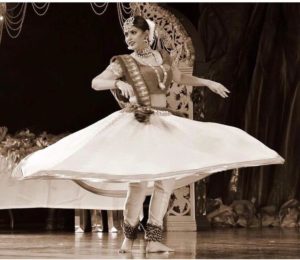 Kathak is one of the eight major forms of Indian classical dance. The origin of Kathak is traditionally attributed to the traveling bards of ancient northern India known as Kathakars or storytellers. The term Kathak is derived from the Sanskrit word Katha which means “story”, and Kathakar which means “the one who tells a story”, or “to do with stories”. Wandering Kathakars communicated stories from the great epics and ancient mythology through dance, songs and music. Kathak evolved during the Bhakti movement, particularly by incorporating the childhood and stories of the Lord Krishna, as well as independently in the courts of north Indian kingdoms. Kathak is unique in having both Hindu and Muslim cultural elements. Kathak performances include Ghazals as well.
Kathak dancers tell various stories through their hand movements and extensive footwork, their body movements, spins or chakkars and flexibility but most importantly through their facial expressions. Kathak flourished in northern India under Moghul influence. Kathak has three main “gharanas” or schools, named after the cities where the Kathak dance tradition evolved – Jaipur, Banaras and Lucknow. While the Jaipur gharana focuses more on the foot movements, the Banaras and Lucknow gharanas focus more on facial expressions and graceful hand movements.
